

A Proper ELAND
By Paul Brisso
A few months before my 2016 safari, John X Safaris owner, and PH, Carl van Zyl, and I were still working out the details of what and where we were going to hunt. We had an idea with my “wish list”, but were still exploring a few further options for my fifth trip to Africa.
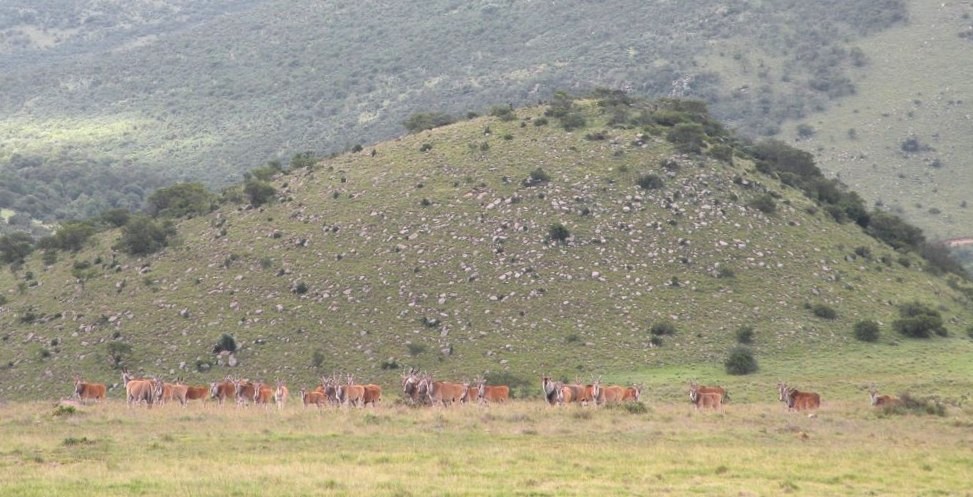
In an e-mail going over some of our plans, Carl closed with: “Am I correct that you do not have a big proper Cape Eland yet? If not, THEN THIS IS A MUST. I FOUND A HONEY HOLE CLOSE TO WHERE WE WILL BE HUNTING FOR BUSHBUCK. If you do not have one, then this is it! Trust me—even I want to go hunt one!” He attached a couple of scouting photos of old block-bodied, blue-gray Eland bulls he had snapped with his large wildlife lens.
I smiled as the last sentence of his e-mail took me back to a hot, dusty evening a couple of years before in Mozambique. Last light found Carl, our Mozambique professional hunter, and I, trudging back to the truck after spending a few hours unsuccessfully putting some stalks on a big Sable. We were done hunting for the day, sweaty, dusty and black with soot from grass burns. We were talking and laughing as we headed to the truck anticipating ice-cold beers waiting for us at camp.
Suddenly, in a heartbeat, Carl returned to hunting mode. “Shoot that Reedbuck!!!” he said in a low but insistent voice. I gave him a puzzled look. This area of Mozambique was noted for having a lot of Common Reedbuck but very average trophy quality. When I hesitated, Carl spoke again, even more insistent: “Either shoot that Reedbuck, or give me your rifle and I will shoot him for myself.”
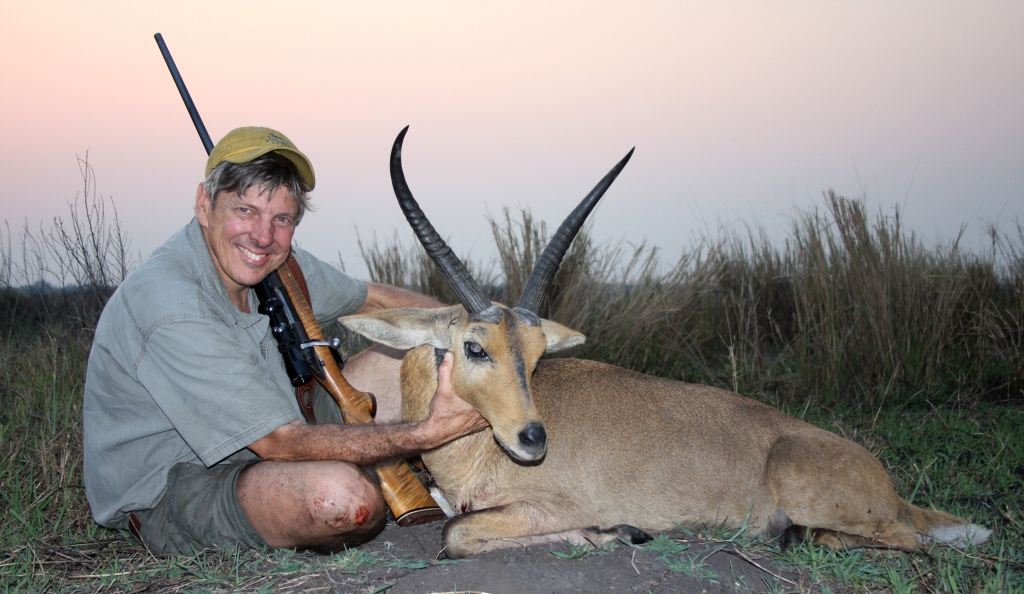
I harvested that Reedbuck in the failing light of Mozambique. It turned out to be the biggest Reedbuck taken in the concession since the area reopened to hunting following the Mozambican civil war and a tremendous trophy for any Reedbuck area.
So when Carl said he wanted to hunt one of these Eland himself, he had my full attention. I have to admit that early in my African hunting career Eland did not appeal to me. I like big antlers and big horns, and an Eland’s horns are rather small in relationship to the size of their Moose-like body. Kudu, Gemsbok, Impala, Waterbuck, Black Wildebeest and Lechwe were much higher on my priority list on those earlier safaris. Beside, Eland are so big, after you get one what do you do with it?
After hunting twice in Namibia, I went on my first safari in South Africa with Carl. My good friends, Steve and Lisa Dahmer, were on that hunt also. It was Lisa’s first trip to Africa, but Eland was at the very top of her trophy wish list.
Late one afternoon Carl and I saw a group of six or seven Eland, including one huge old bull. We returned the next morning and the trackers and I sat by the truck on an opposite hillside and watched Carl, Steve, Lisa and their professional hunter put on a long, challenging stalk on the moving herd. They expertly and patiently used the brush and contours of the hill to close the distance. After a couple of hours of cat and mouse, Lisa took advantage of her opportunity and dropped the bull with a single well-placed shot.
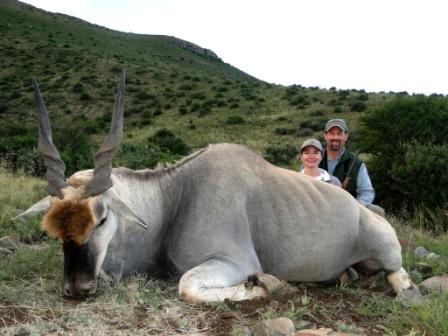
After a panoramic view of the action, the trackers and I joined the hunting party for my first up close and personal view of a truly magnificent Eland bull.
If you want to make a case that the record book is not always an accurate measure of a true trophy animal, the Eland is Exhibit A. The scoring systems are based solely on a combination of length and circumference of the horns. As a result, the record books are crowded with middle-age to young Eland bulls that have not yet reached their true prime. These bulls have reached their optimal horn length and have enough mass to “score” well. They are visibly larger than the females (which also have horns) but are generally the same reddish-brown grey color.
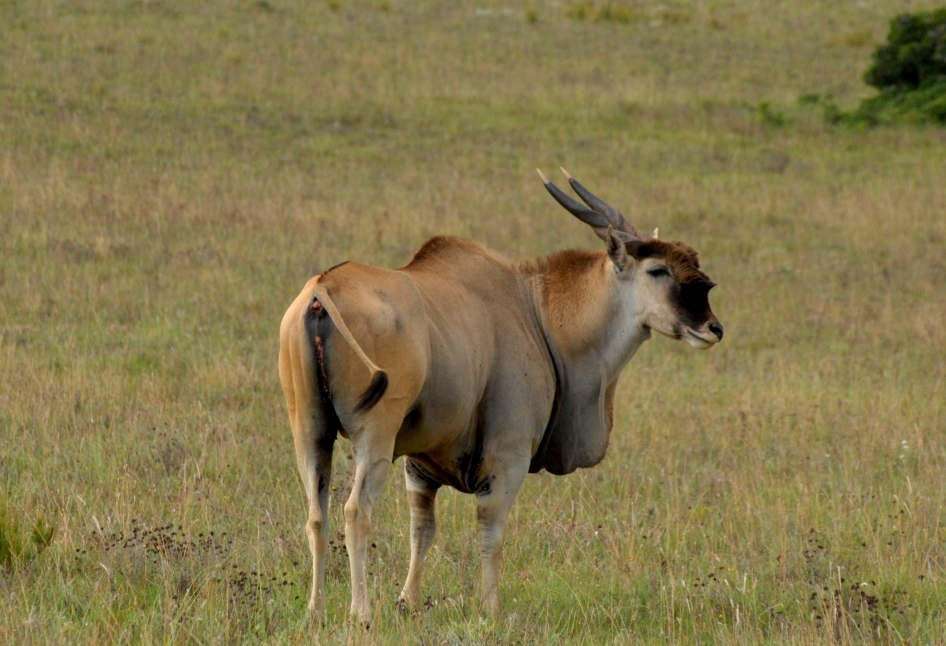
However, a truly mature bull is not just bigger than the cows (and the younger bulls) but absolutely dwarfs them. An old bull looks like a railroad box car with legs that appear too small for the body and a massive neck. He is usually a steel blue-gray color that can never be confused with a cow or younger bull. In a herd, he sticks out from the cows and younger bulls like a sore thumb by his sheer body size and color.
The old bulls have other attributes that are never reflected in the record book, such as a thick mop of red-brown hair on the forehead and a huge neck dewlap, which is used as a “radiator” to circulate and cool blood near the skin surface. The horns also develop significantly more mass at the base and the sharp spiral ridges are smoothed from wear, but unfortunately for those hung up on the record book numbers, the increase in base mass is more than offset by wearing down of the horn length as the bull matures and ages. The bottom line is that a venerable old Eland is very often “outscored” by less mature bulls.
After taking a magnificent Bushbuck on the first day of our safari, we commenced our hunt for a “proper Eland.”
Day one of the Eland hunt found us glassing a herd of about 30 near mid-day with a bull that had us vacillating but ultimately passing (a decision we questioned after reviewing the video several times that evening back at the lodge).
Later in the afternoon we found a herd of about ten, with a couple of young bulls and one larger bull, bedded on a hillside but starting to stir. Carl anticipated their route perfectly. We set up an ambush about a quarter of a mile away. They ultimately passed side hill about 150 yards from us but the best bull in the group was not quite a “proper Eland” yet.
Carl remained upbeat and confident. “This area has a lot of old bulls I saw while scouting that we haven’t seen yet. We’ll find them eventually,” he predicted.
The rest of that afternoon and evening those bulls continued to elude us. However, in the closing light as we were returning to the lodge, we took advantage of an opportunity to take a wonderful trophy Springbok.
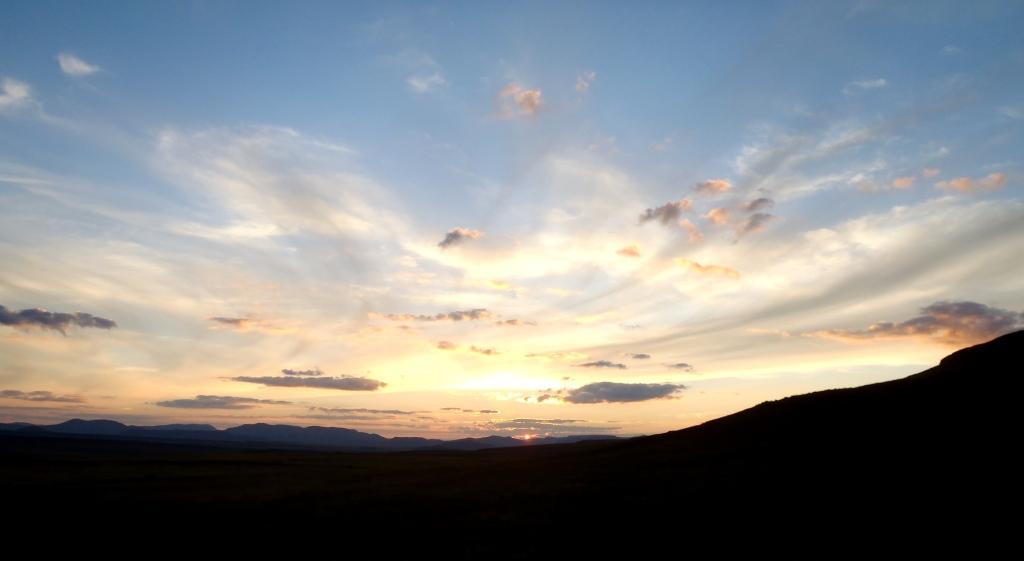
We ended the day with a fine animal and undaunted by our failure to find the proper Eland.
We decided to give the Eland some time to get more cooperative the next day and traveled to a different area where we unsuccessfully chased Vaal Rhebuck, but the following day we were back searching for a proper Eland. Early in the day it appeared the Eland were going to be as frustrating as they had previously been. But it was not to be.
We spotted some Eland in a valley that appeared to have at least one very promising bull. The wind seemed right. We anticipated a fairly level, easy stalk of a quarter-mile or so up the valley to get set up for a good shot. But Carl, Jose Hernandez, my wife, Teresa, and I, hadn’t gone more than about 25 yards before we realized the wind was swirling. We were going to have to climb to the top of the ridge and make a long loop around on the ridge-line to get into position while keeping the wind in our favor.
I have learned that things can change quickly in Africa, and as we got out of the truck for what was supposed to be an easy stalk I had slipped a bottle of water into a cargo pocket of my pants. I was glad I did.
We had a relatively short, but very steep climb to the top of the ridge. It was in full sun and the morning was already getting hot. I felt like I was on a sheep hunt, but Carl’s 300 Win. Mag. with its scope and suppressor must have weighed about twice as much as the lightweight .270 I am used to carrying on climbs. After a short but steep climb the ridge-line transitioned into a more gradual long, steady grind uphill. As the morning wore on the heat became more intense and I was sweating profusely. My wife’s encouragement and the last-minute water bottle kept me going.
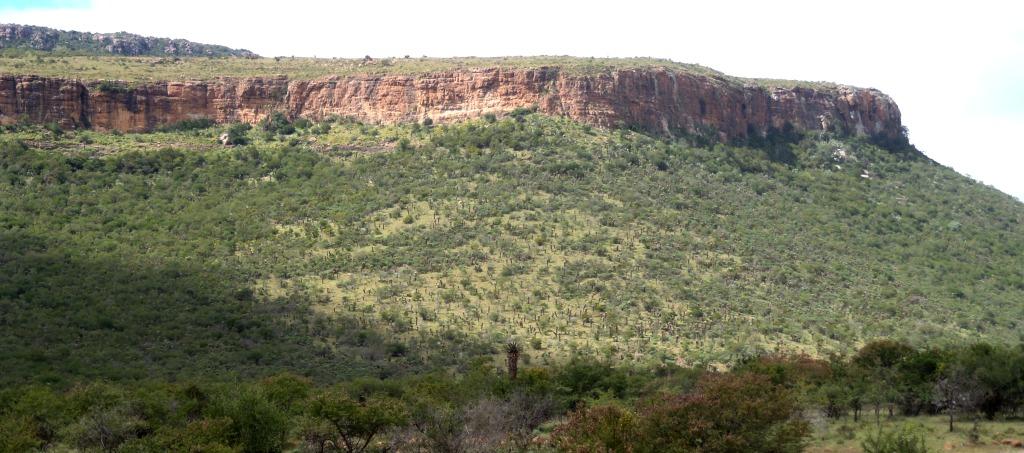
Making a wide loop, we eventually reached a spot where a slight downhill into a shallow swale and then a brief short climb though some moderately thick brush, totaling about 500 yards, should bring us to a spot above our Eland. I was dragging, but could see the light at the end of the tunnel.
Hunting on my own, I would have covered the distance relatively quickly. Carl, however, continued to move slowly, glassing constantly. I figured he was giving me the opportunity to recover from the climb and be more rested for the shot when we got to our objective. That’s why he’s the professional hunter.
We had only gone about a hundred yards when Carl slowly melted to the ground and gestured to the rest of us to get down and be quiet. After a couple of minutes of glassing, he set up the shooting sticks next to him for a sitting shot and motioned me to stay down, but crawl forward.
Reaching his side, Carl whispered, “These are two of the bulls we have been looking for but have not seen yet.” Despite the fairly high brush, about two-thirds of two bulls’ bodies cleared the top of the vegetation about 100 yards away. “The one on the left,” Carl whispered. The sitting shot on the sticks was rock solid, the bull was broadside and filled most of the scope, and the red dot of the lighted reticule painted the point of the shoulder.
At the shot, the bull spun 180 degrees and headed downhill, disappearing into the brush. As he disappeared everything went quiet—we did not hear him crashing away. “You hit him perfect!!” Carl assured me. We circled uphill a bit to get a better perspective then worked our way to the last sighting of the bull.
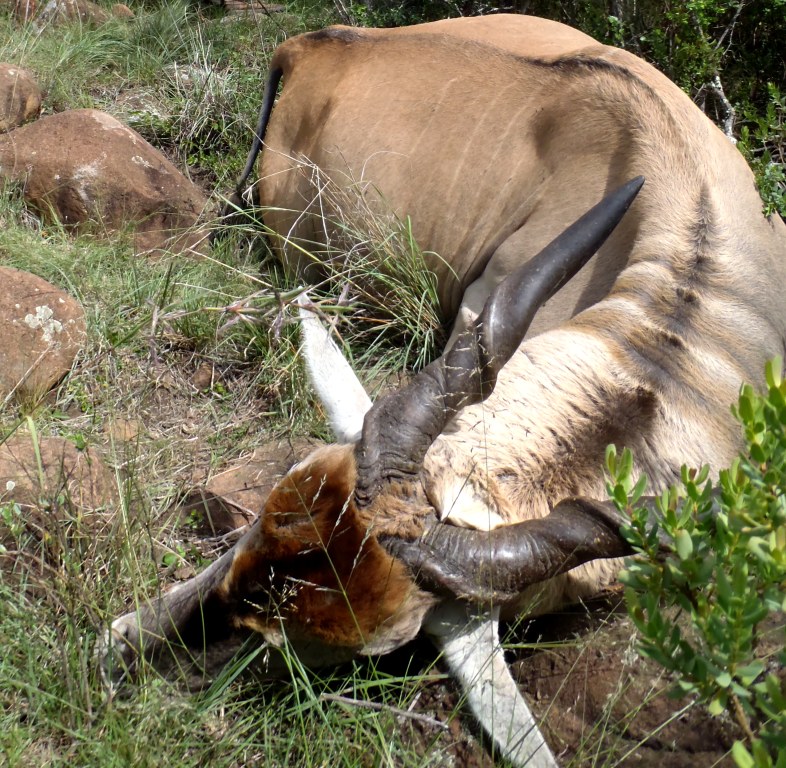
We found him piled up less than 25 yards from where he had stood.
He was truly a proper Eland. The horns had massive bases, but the length was worn to stout posts and the spiral ridges were blurred. He had it all—the horns, a heavy red-brown forehead “mop,” a huge dewlap, massive size, and a blue-gray cape.
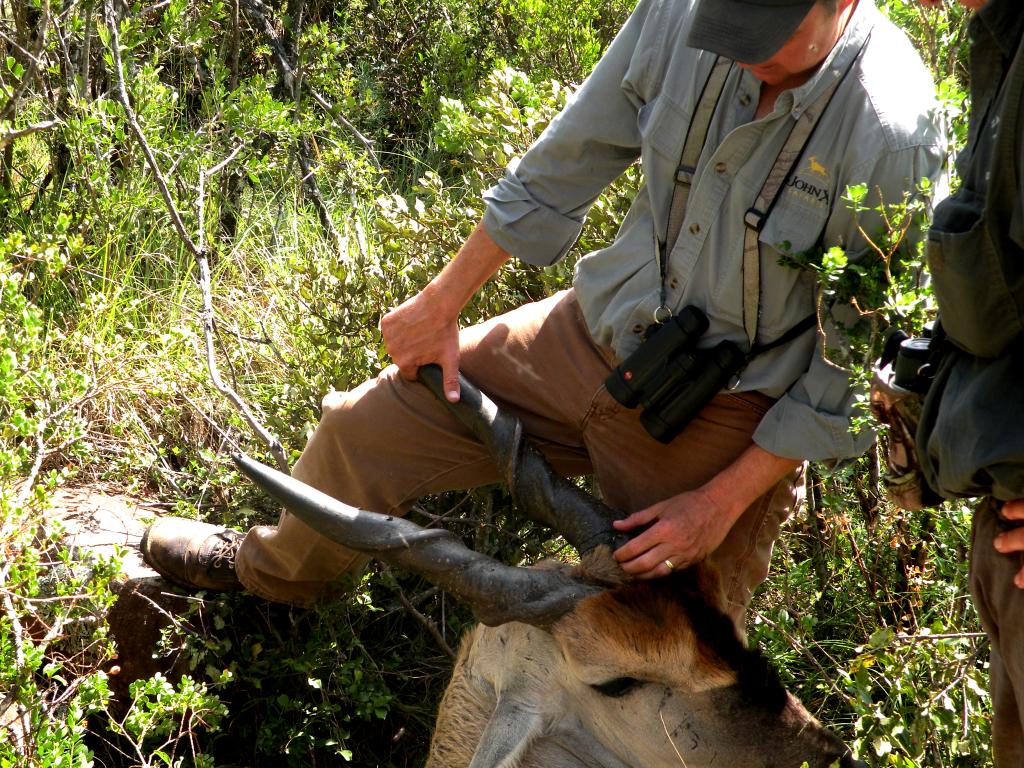
I thought I had a place for him in my trophy room. After recently getting the approximate measurements from the taxidermist and measuring my space, now I am not so sure. One of the first questions I ever had about hunting Eland is coming back to haunt me: Now that I have him, what am I going to do with him?”
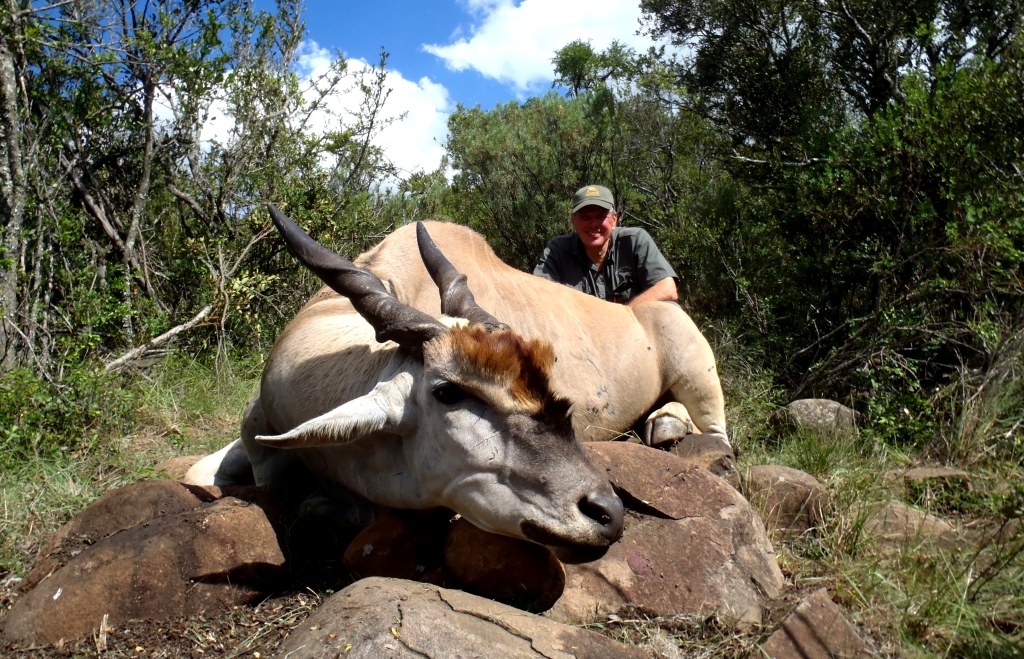
But it’s a great problem to have.
For more information and current updates about John X Safaris; follow us on Twitter, connect with us on Facebook, subscribe to our YouTube Channel and visit our Website!